
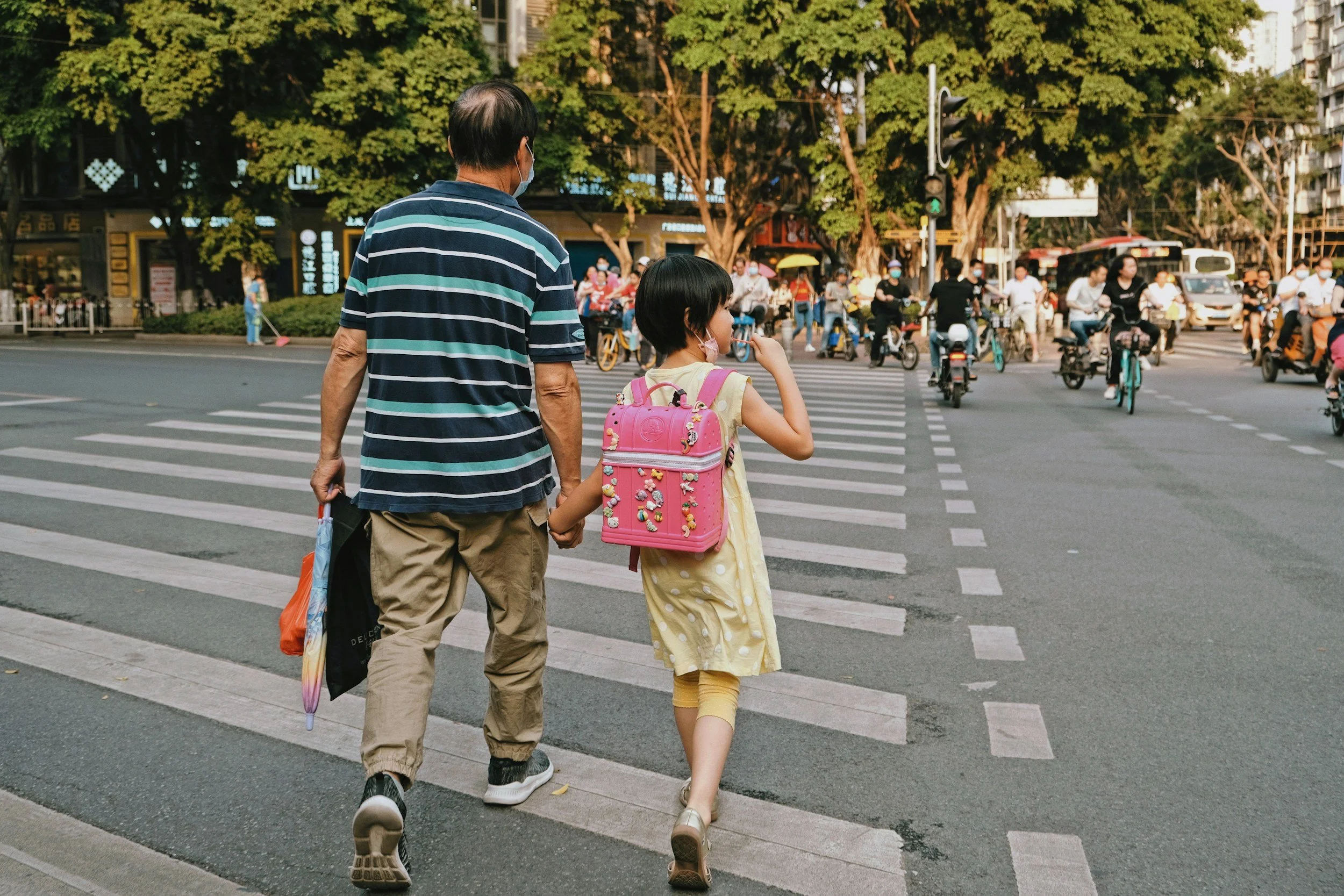
Halloween is one of the busiest nights of the year for people on foot. Kids in dark costumes cross between parked cars, parents walk behind them with flashlights, and drivers are heading home from work as the sun goes down.
It is also one of the riskiest. According to NHTSA, nearly half of all crash fatalities on Halloween night in 2023 were alcohol-related.
Pedestrian accidents happen all year, of course. But whether it happens on October 31 or any other night, a person hit by a car in Pennsylvania has rights, and knowing them early makes a difference.
Who has the right of way?
Pennsylvania law puts a clear duty on drivers at crosswalks. Under 75 Pa.C.S. § 3542, when there is no working traffic signal, a driver must yield to a pedestrian crossing in a marked crosswalk or an unmarked crosswalk at an intersection.
Pedestrians have responsibilities too. The same law says a pedestrian should not suddenly step off a curb into the path of a car that is too close to stop.

Outside of crosswalks, pedestrians are generally expected to yield to traffic. That does not give drivers a free pass. Every driver still has a duty to watch the road, keep a safe speed, and avoid hitting someone they could reasonably see, which matters on a night when children are everywhere.
What if the pedestrian was partly at fault?
This is one of the most common worries after an accident, and it does not automatically end a claim.
Pennsylvania uses a modified comparative negligence rule. An injured person can still recover as long as their share of the fault is not greater than the driver's. Any recovery is reduced by their percentage of fault.
So a person who crossed mid-block, or a child who darted out from behind a parked car, may still have a claim against a driver who was speeding, distracted, or impaired.
Who pays the medical bills?
Many people are surprised to learn that their own car insurance usually pays first, even when they are walking and not driving at all.
Under Pennsylvania's order of priority for first party benefits, a pedestrian generally turns to these sources in order:
Their own auto policy, if they are a named insured
A policy covering them as a household member, such as a parent's or spouse's policy
If neither exists, the policy on the vehicle that hit them
When no coverage is available at all, Pennsylvania's Assigned Claims Plan may provide limited benefits.
These first party benefits cover medical bills up to the policy limit, regardless of fault. Our post on who pays your medical bills after a car accident in Pennsylvania explains how those benefits work and what happens once they run out.
Pain and suffering, lost income beyond the policy benefits, and future care are a separate matter. Those are pursued through a claim against the driver who caused the accident.
When a child is the one who was hit
Children are the most vulnerable pedestrians, and the ones most likely to be out on Halloween night.
A child's injury claim generally has more time than an adult's, because the filing deadline does not begin to run until the child turns 18. Parents, however, may have their own claims, such as for medical bills they paid, and those can follow the standard two-year deadline. Our post on how long you have to file a personal injury claim in Pennsylvania covers those timelines in more detail.
What to do after being hit by a car
Call 911 and get medical care, even if the injuries seem minor. Adrenaline hides pain, and some injuries, like head injuries, take time to show.
If you can, get the driver's name, insurance, and license plate. Take photos of the scene, the lighting, the crosswalk, and any costumes or clothing involved. Ask witnesses for their contact information, and ask nearby homes or businesses whether a doorbell or security camera captured the moment.
Then be careful with the driver's insurance company. A recorded statement given the next day can be used to shift blame onto the person who was hit.
Talk to someone about a pedestrian accident
If you or your child was hit by a car in Ebensburg, Johnstown, Altoona, the Pittsburgh area, or elsewhere in Central Pennsylvania, you can ask about your options without any obligation.
Sutton & Lovette offers a free consultation. Calls to (814) 471-7702 reach the firm's Ebensburg office directly rather than an answering service.
This article provides general information about Pennsylvania law and is not legal advice. How the law applies depends on the facts of each situation.
